Published By: Night Time Industry Association

CCTV can help to reduce the risk of work-related violence and crime by:
- helping staff and customers feel safer;
- acting as a deterrent to offenders;
- helping you to direct staff or security to where they’re needed;
- enabling you to collect evidence to help find and convict offenders.
Monitoring the system
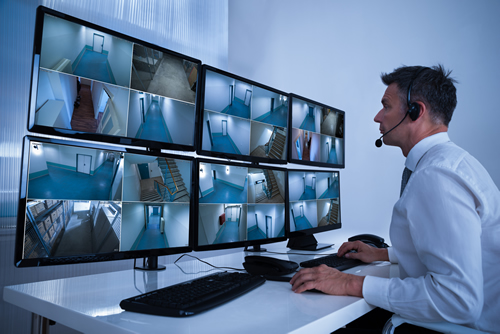
Staff who monitor the CCTV system need to be alert and committed, and you need to know that they will not misuse the system. Periodic spot checks can be made to ensure the system is being operated properly.
CCTV operators should be trained to identifying suspicious behaviour, keeping and maintaining records, identifying known troublemakers or alerting colleagues.
Signage
Signs should be used to ensure both staff and visitors are aware of the presence of CCTV. Signs should be in the immediate vicinity of the CCTV, be clearly visible and legible to the public, A4 or A3 in size, stating ‘CCTV is in operation’ and identify a responsible person and contact number.
Lighting
The quality of CCTV may be worse at lower light levels. Some cameras are also unable to cope with or adapt to artificial lighting/neon lighting/low lighting/street lighting or lighting that is too close in the hours of darkness. This can lead to strobing or glare and affects the ability to monitor images and the quality of recorded images.

Location of cameras
Cameras should cover areas with a high risk of violence. Some suggestions for camera location include:
- all entry and exit points from inside and outside, cash offices or storerooms, outdoor areas such as gardens or car parks, counter areas, separate rooms where visibility from counters or bars is hindered, and toilet areas;
- cameras in nightclubs and pubs could cover dance floors, fire exits and areas where security searches are carried out. This monitoring should be possible in all light conditions;
- satellite cameras can be positioned at regular intervals along shop aisles and should be able to rotate 360 degrees to cover a large radius of floor space.
The number of cameras is not as important as their positioning. Also, having lots of cameras can mean your customers may start to feel worried about becoming a victim of crime, rather than feeling safer.
Camera type and mounting
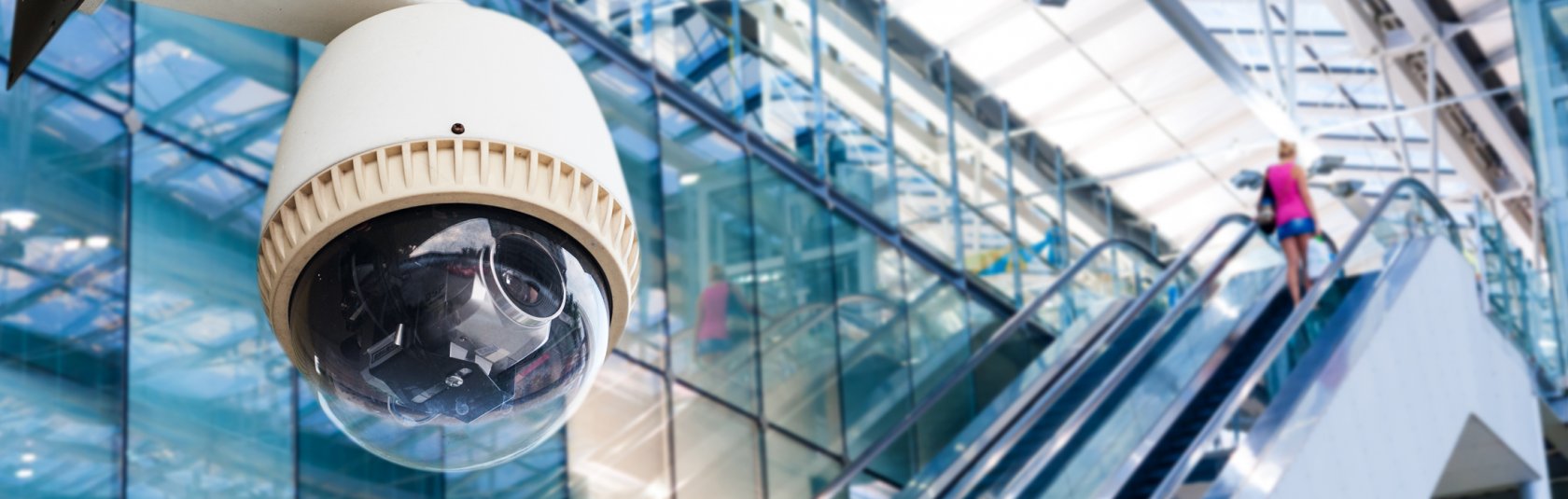
There are many different types and makes of camera, and what you choose will depend on the objectives of your CCTV system. Cameras can be static or pan, tilt and zoom (known as PTZ).
- Static cameras can be useful for producing good quality evidence as they point in one direction and have a fixed focal length, but they can be less useful for live monitoring.
- PTZ cameras can mean operators can control their field of vision and the cameras can be more interesting to operate. They are also seen to move so are better for live monitoring and reassuring the public. However, to ensure adequate coverage requires many overlapping PTZ cameras, which can be costly.
- Colour cameras can sometimes have lower resolution and sensitivity than monochrome ones but they have other advantages such as it being easier and more natural to view the images. Camera technology is improving so the ability of colour cameras to deal with low light levels or mixed/artificial light sources is getting better.

Monitors
Monitors must be of good quality. Image quality is particularly important, for example monitors must be set up correctly for colour balance and a satisfactory level of contrast and brightness. There should also be no split screen or rolling CCTV monitors on view to the public as this can identify monitored areas.
Power supply
Cameras can be plugged into a mains supply or a battery can be mounted with or placed near to the camera. If you use batteries just remember to check them regularly!
Receivers/recording
- Digital systems enable faster searching and maintain image quality better than some VCR systems. However, they also have a finite storage capacity.
- Ensure you copy 15 minutes either side of an incident for evidence purposes.
- Recordings can be made in time-lapse mode to enable a single videotape to be used for up to 24 hours. The operator can then switch to real time recording to record a continuous, live event.
Tape management
- Recorded videotapes/still pictures need to be kept in a secure place and access to them should be carefully regulated and controlled. It is important that tapes are securely stored because images used as evidence which result in a conviction are required by law to be kept for the duration of the sentence, which could be more than 20 years.
- Recordings/still pictures should have the time and date superimposed on the image. If you are using a digital system, ensure there is a time date stamp. Don’t forget to check the date and time are correct.
- If using magnetic tapes for recording images, you should make arrangements for cleaning tapes before they are used again. Tapes should be ‘de-gaussed’ (magnetically cleaned) of all previous images. Make sure you monitor how many times each tape has been used, and specify a maximum number of recordings (it is unwise to set this figure above 12 as the image degrades each time a tape is used).
- There should be sufficient storage capacity for 31 days’ good quality picture. If the system is VCR, ensure you have 31 tapes.
- Visually check tapes by playing them on different machines.
- Video and audio information must not be disclosed to third parties. Neither tapes nor still pictures should be released to the press other than by a police officer. Still pictures should be destroyed unless there are good reasons for retention. Provide guidelines as to who can take hard copies of CCTV images.
Document your arrangements for tape usage and storage.
For full article visit NTIA |Crime Prevention
- Log in to post comments
 Leisuresec